The Hidden Cost of Delaying a Bathroom Update
An outdated bathroom affects far more than aesthetics. In Spokane, where many homes were built during the post-war construction boom of the 1950s and 1960s, original bathrooms often feature cramped layouts, insufficient storage, and fixtures that have aged past their functional lifespan. These spaces were designed for different living patterns, with single sinks, limited counter space, and tub-only configurations that no longer match how families actually use a bathroom today.
Beyond daily inconvenience, older bathrooms in this region face specific challenges tied to climate and construction methods. Spokane’s cold, wet winters put constant stress on aging grout lines, caulking, and subflooring. Homes with original tile surrounds or laminate counters often hide moisture damage that only becomes visible during renovation. Left unaddressed, these issues can lead to mold growth behind walls, compromised structural framing, and water damage that spreads to adjacent rooms.
The impact on home value is equally significant. When buyers tour properties in Spokane Valley, Liberty Lake, or Mead, bathrooms rank among the top three spaces they evaluate. A bathroom that feels cramped, shows visible wear, or lacks modern amenities like dual sinks or walk-in showers often becomes a negotiating point that costs sellers thousands at closing. Conversely, a thoughtfully updated bathroom with quality materials and functional design can return a substantial portion of the investment while making daily life more comfortable for years to come.
Why In-House Teams Eliminate Renovation Friction
Bathroom remodeling demands precise coordination across more trades than almost any other home improvement project. Plumbers rough in new lines and drains, electricians install GFCI outlets and vanity lighting, tile setters waterproof and finish shower surrounds, and cabinet makers deliver and install custom storage. Each trade depends on the work completed before it, and delays in one phase cascade through the entire timeline. This is where most contractors encounter problems.
When a contractor outsources each specialty to separate subcontractors, the project becomes a scheduling puzzle with multiple moving parts. A delayed cabinet delivery pushes back plumbing fixture installation. A tile order arrives with the wrong color, forcing the electrician to reschedule lighting placement. Homeowners find themselves managing communication between trades, uncertain who is responsible when issues arise, and frustrated by timelines that stretch far beyond the original estimate.
The solution lies in vertical integration and accountability. When a single team manages layout design, builds custom cabinetry in-house, coordinates all trades under one roof, and maintains direct oversight through every phase, the friction disappears. Cabinets are built to exact specifications and delivered on schedule because the same team designing the layout is building the vanity. Tile setters and plumbers work from the same blueprint, eliminating miscommunication. Homeowners work with one point of contact from demolition through final walkthrough, ensuring every decision is documented and every phase stays on track.
What a Full-Service Renovation Includes
A successful bathroom renovation goes far beyond swapping fixtures. It starts with layout analysis to determine whether the existing footprint serves your needs or whether walls, plumbing, and electrical need repositioning. Moving a toilet or relocating a shower to create better flow requires rough-in work that must happen before any finish materials arrive. This is where planning separates functional remodels from cosmetic updates that fail to solve the underlying problem.
Custom cabinetry represents one of the most impactful upgrades available. Stock vanities force homeowners to adapt their vision to standard dimensions, often leaving gaps, wasted space, or compromised storage. Custom-built vanities, designed and constructed to fit the exact dimensions of your bathroom, maximize every inch. Drawers can be sized for specific items, countertop height adjusted for comfort, and finish materials selected to complement tile, flooring, and lighting. When cabinetry is built in-house, changes during construction can be accommodated without rescheduling a third-party shop or waiting weeks for revisions.
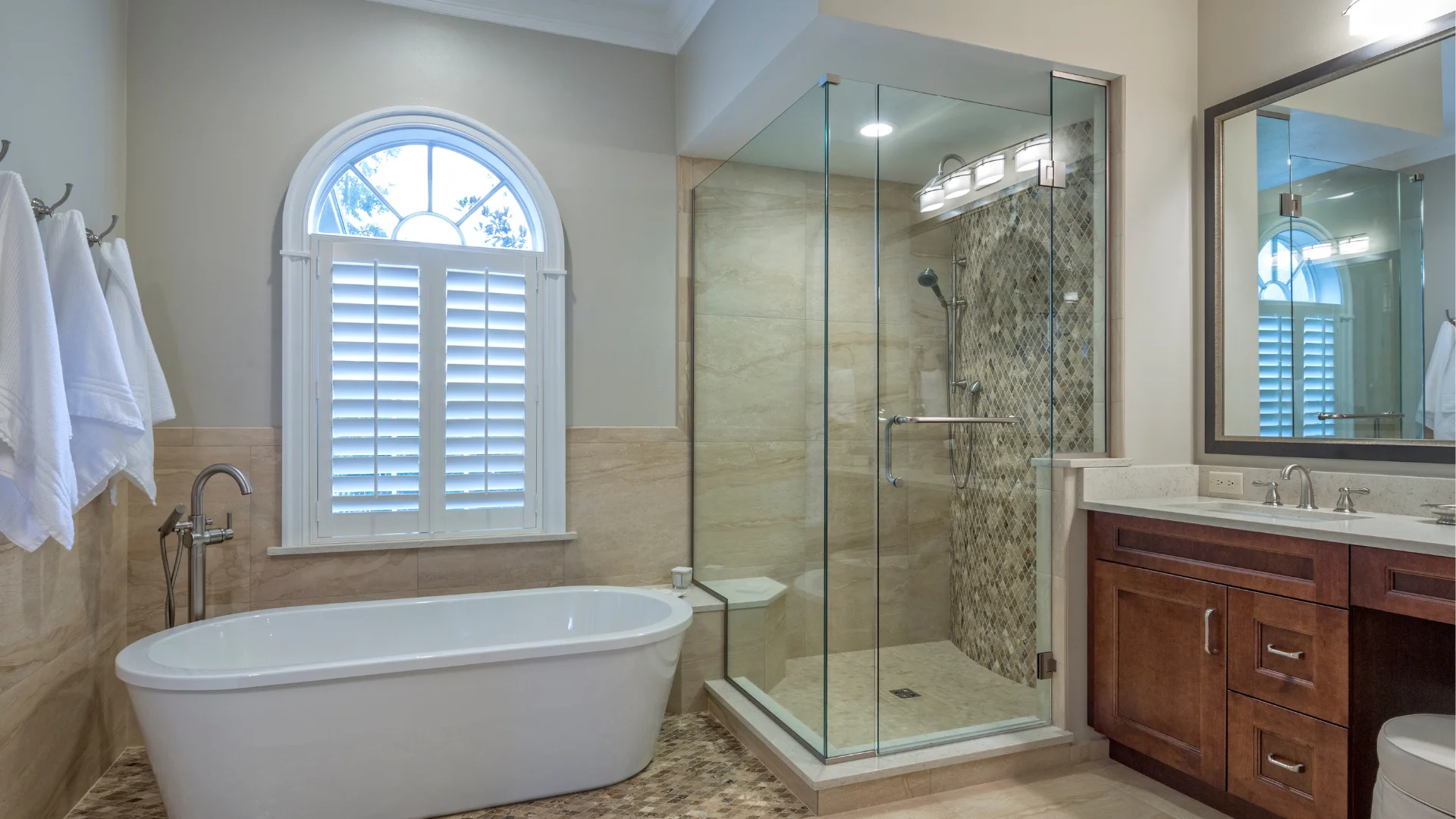
Tile selection and installation define both the aesthetic and longevity of the space. Porcelain and ceramic tile installed with proper waterproofing membranes, sloped shower pans, and epoxy grout resist Spokane’s moisture challenges far better than outdated materials. Walk-in showers with frameless glass, custom niches, and curbless entries improve accessibility and create a spa-like atmosphere. Tub-to-shower conversions remain among the most requested updates, particularly for homeowners who rarely use a bathtub but value the increased usability and modern appearance of a well-designed shower. Fixture upgrades, from low-flow toilets to thermostatic shower valves, complete the transformation while improving water efficiency and daily comfort. Every element is selected for durability, chosen to withstand the humidity and temperature fluctuations common in Spokane-area homes.
Trusting Experience, Licensing, and Material Quality
Choosing a contractor for a bathroom renovation requires more than comparing bids. It requires confidence that the team managing your project has encountered and solved the challenges specific to your home’s age, layout, and construction type. Over 25 years of remodeling work across Spokane provides that foundation. Older homes with cast iron plumbing, outdated electrical panels, and settling foundations present different obstacles than newer construction, and experience determines whether those obstacles derail a project or get resolved efficiently.
In-house craftsmanship changes both quality and accountability. When the same team designing your layout is building your vanity, installing your tile, and coordinating your plumber, there is no opportunity to shift blame when something does not fit or finish as planned. This vertical approach also accelerates timelines, as cabinet construction, material ordering, and trade scheduling happen in parallel rather than sequentially. Homeowners gain flexibility to adjust finishes, modify storage configurations, or upgrade fixtures mid-project without navigating change orders through multiple subcontractors.
Material selection for moisture control separates remodels that last decades from those that require repair within years. Grout type, waterproofing membranes, underlayment materials, and sealant quality all determine how well a bathroom withstands daily use and seasonal humidity. Transparent pricing eliminates the surprise costs that plague many renovations. Before demolition begins, homeowners receive a detailed breakdown covering labor, materials, cabinetry, tile, fixtures, and project management. There are no vague line items or hidden fees. Additionally, a 10% discount for Veterans, Seniors, and First Responders reflects a commitment to the community beyond profit margins. Trust is built through clarity, accountability, and results that meet the standards set during initial planning.